 Reviews


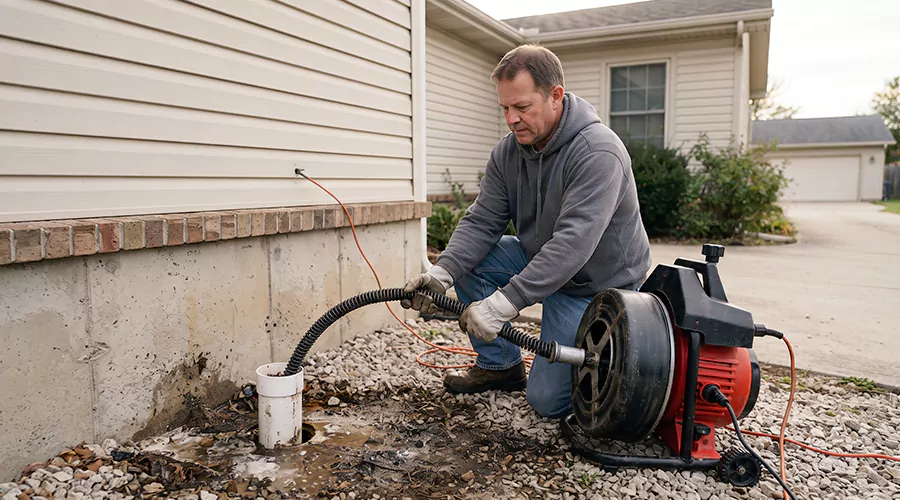
You can clear a main sewer line clog yourself when you have an outdoor cleanout and the clog is soft blockage rather than roots. The DIY route saves the $150 to $500 a plumber charges for main line snaking.
Honesty first: This is the most demanding DIY job in home plumbing. Rental sewer machines use heavy cables spinning at high speed that can grab clothing, hair or a hand in an instant.
Read the safety sections as carefully as the steps. The line between saving $400 and visiting an emergency room is technique.
Signs the Clog Is in the Main Line
A clogged sewer line takes every drain in the house down together because all of them feed one pipe. That's the diagnostic signature. A fixture clog stays local while a main line clog spreads its symptoms everywhere at once.
Gravity picks the first victims. A main drain clogged in house plumbing shows up at floor drains and ground-floor tubs before anywhere else, since backed-up water exits at the lowest opening. Watch the cross-talk too: A mainline sewer clog makes the toilet bubble when the washing machine drains, and a clogged sewer drain sends shower water rising when you flush.
Scope separates the bills. A main drain clog is a whole-house event that no single-fixture fix can touch, so stop plunging individual drains once two or more fixtures misbehave together. Stop running water entirely at that point, because every gallon you add has nowhere to go but your floor.
Insider Tip: Flush one upstairs toilet while watching the lowest tub drain. Rising water there confirms the main line in ten seconds.
Find the Main Sewer Line Clean Out
The main sewer line clean out is your access door, and the whole DIY question depends on having one. It's usually a capped pipe near the foundation or out in the yard, often a white pipe sticking slightly above the ground, sometimes hidden behind landscaping.
Look in the predictable places: along the wall nearest the bathrooms, near where the sewer exits the house, and in the yard on a straight line toward the street or septic tank. A main line cleanout is typically a 3- to 4-inch threaded cap, and some homes have a second one at the property line. Finding these access points can make Sewer Line Cleaning easier and help technicians reach the blockage more efficiently.
Missing one changes the plan. Some properties have no cleanout at all, and installing one is worth considering because the alternatives mean pulling a toilet, which can unleash backed-up sewage directly into your bathroom.
Insider tip: photograph your cleanout's location today while nothing is wrong. Hunting for a buried cap during an active backup doubles the misery.
Open the Cap Safely
A blocked line can hold pressurized sewage behind that cap, and opening it wrong wears the consequences. Loosen the threaded cap slowly to release built-up pressure before removing it fully. Dress for the job: gloves, eye protection and boots you can hose off.
Remove the cap and step away to let any standing water drain off away from you. A full pipe at the cleanout confirms the clog sits downstream toward the street. An empty pipe means the blockage is upstream between the cleanout and the house, which tells you which direction to feed the cable.
Let the line finish draining before any tool goes in. A dry sewer line makes the job safer and cleaner from start to finish.
Clear the Line With a Drain Machine
To unclog main sewer line blockages you need a rented electric drum machine rather than a hand snake, since electric models extend 50 to 100 feet, which is usually enough to reach main line clogs. Respect the machine at every step.
- Gear up and position: Heavy gloves stay on, loose clothing stays off and the machine sits stable at the cleanout.
- Feed slowly: Cleaning out sewer line pipes starts gently: Feed the cable in until you feel firm resistance where it slows or resists pushing.
- Work the blockage: Rotate the cable to hook or break up the debris in short bursts rather than continuous force. To unclog sewer line clogs made of paper and grease, the cable punches through fast. A main drain line clog made of wipes feels spongy and takes several passes.
- Repeat the cycle: Pull the cable back and feed again a few times to fully clear the clog or break up multiple blockages. Clearing a sewer line completely means working past the first breakthrough, since you continue until the standing water drops and the clog is fully gone.
- Flush and verify: Run water from the nearest faucet, then flush toilets to confirm free flow.
- Clean and close: Hose the cable down as you withdraw it, then recap the cleanout tightly.
Distance is your DIY boundary. The rental will unclog main drain blockages within its cable's reach, and a plumbing main line clog beyond 100 feet belongs to a pro regardless of your determination.
Insider tip: never grab a spinning cable to help it along. Kill the motor first for every adjustment, because the machine doesn't distinguish between a clog and a glove.
What Never Works on a Main Line?
Three popular shortcuts fail at main-line scale, and two of them cause damage on the way to failing. Skipping them saves money and preserves the pipe. Each one has a physics problem it can't beat.
Chemicals lead the list. Chemical drain cleaners are not suitable for main line clogs and can damage your pipes, and no bottle can unclog sewer drain blockages sitting 60 feet away behind gallons of standing water. Plunging fails on scale, since a plunger's pressure disperses through a 4-inch main instead of concentrating on the clog. The baking soda ritual rounds out the list, because a fizzing cup of anything is a rounding error against a root mass.
The pattern is volume. Main lines defeat every method that works at the fixture level, which is exactly why the cable exists.
When DIY has to Stop
Four findings end the DIY attempt on the spot. Each one means the clog is a symptom rather than the disease. Pushing harder past these signs converts a cleaning bill into a repair bill.
- The cable returns wrapped in roots. A main sewage line clogged with roots needs a root-cutting attachment with blades and a follow-up plan, since cut roots regrow through the same joints.
- The same line clogged within months. Recurring blockage means the pipe itself needs inspection.
- The cable hits a hard stop that never yields. That's often a collapsed or offset pipe rather than a clog.
- Mud comes back on the cable. Soil in the line means a breach, and cleaning can't fix a hole.
The camera settles every mystery. Pros run a plumbing camera down the line to locate the problem and clear it without causing more damage, and footage proves whether the main line plumbing clog is grease, roots or structural failure.
DIY vs Professional Costs in 2026
The rental math is closer than most DIY math. Rental sewer machines often cost nearly as much as hiring a plumber who knows how to use them safely. The table lays out the real 2026 comparison.
| Option | 2026 cost |
|---|---|
| Machine rental, half day | Often approaching the low end of pro pricing |
| Pro main line snaking | $150 to $500 |
| Camera inspection | $150 to $400 |
| Hydro jetting for severe clogs | $600 to $1,500 |
| Cleanout installation if missing | Worth quoting before the next backup |
Factor the risk premium honestly. A plumber brings insurance, root cutters and a camera, and the price difference on a soft clog often shrinks to the cost of one nice dinner.
Prevention After the Water Flows
The clog you just cleared left its cause behind, and prevention is what stops the rerun. Four habits protect the main line for pennies. Scheduled cleaning does the heavy lifting.
- Book maintenance cleaning: Pros clean main sewer line pipes every 18 to 24 months, and homes with mature trees within 30 feet need service every 12 to 18.
- Ban wipes entirely: Even "flushable" ones built the spongiest clogs your cable met.
- Keep grease in the trash: Cooled fat in a can never coats the main.
- Add drain guards: To tubs, showers and sinks to catch debris before it travels.
Conclusion
A main sewer line clog is DIY-clearable exactly once per set of conditions: an accessible cleanout, a soft blockage and total respect for the machine. Roots, repeats and hard stops all end the experiment in a pro's favor. This week, find and photograph your cleanout, because that ten-minute scouting trip is half the battle already won.